Course Element "Page"
Profile
| Name | Page |
|---|---|
| Icon | |
| Available since | Release 18 |
| Functional group | Knowledge Transfer |
| Purpose | Display of different content in a block-based layout |
| Assessable | no |
| Specialty / Note | Editing in a block-based editor is used in form learning resources and portfolio entries in addition to the course element page. |
Example
There are different layout variants to choose from, in which the desired elements such as images, texts, tables and videos can be flexibly placed and thus the entire page can be designed.
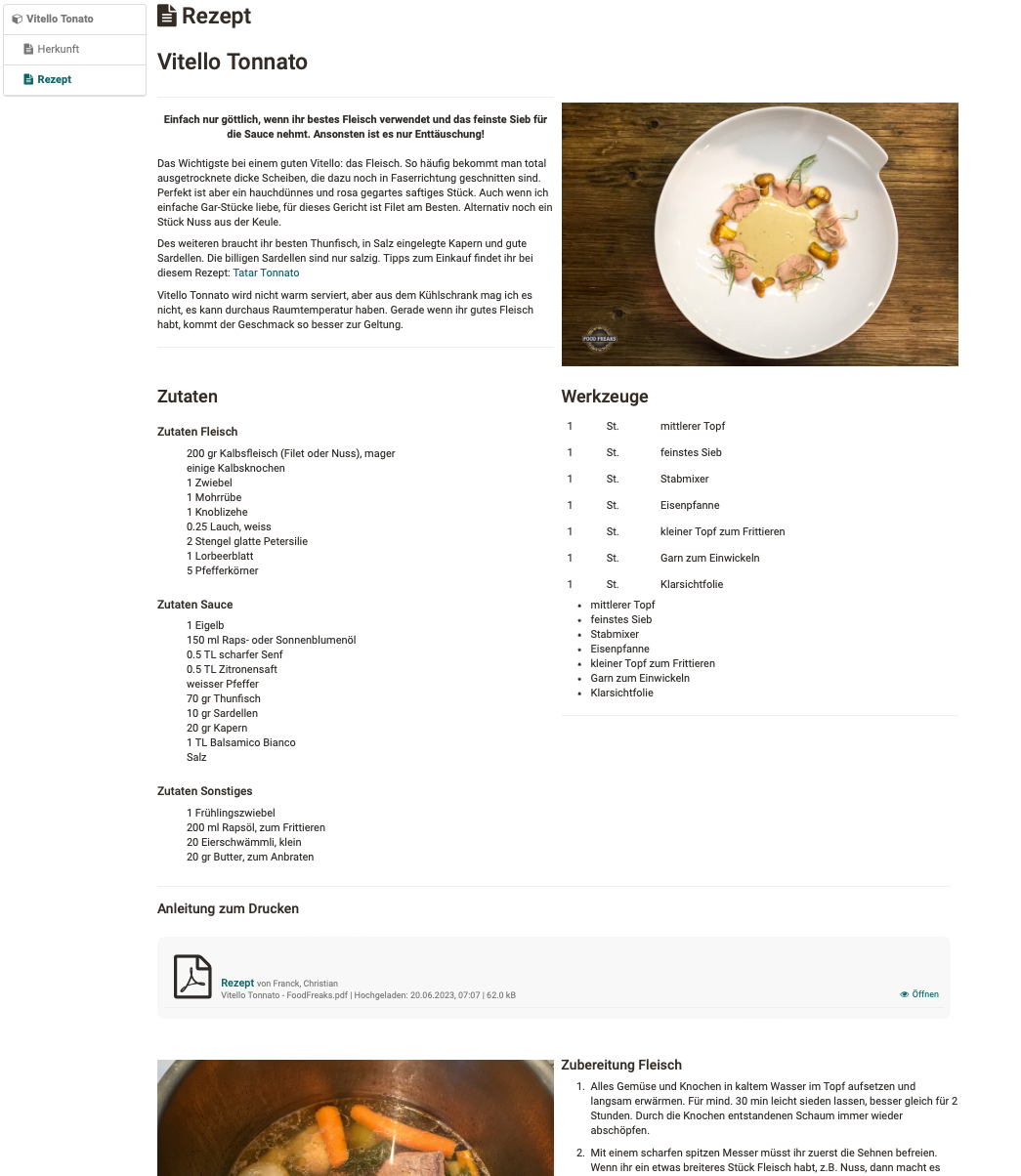
In contrast to the HTML editor (course element "HTML page"), the display in the block-based content editor already largely corresponds to the preview.
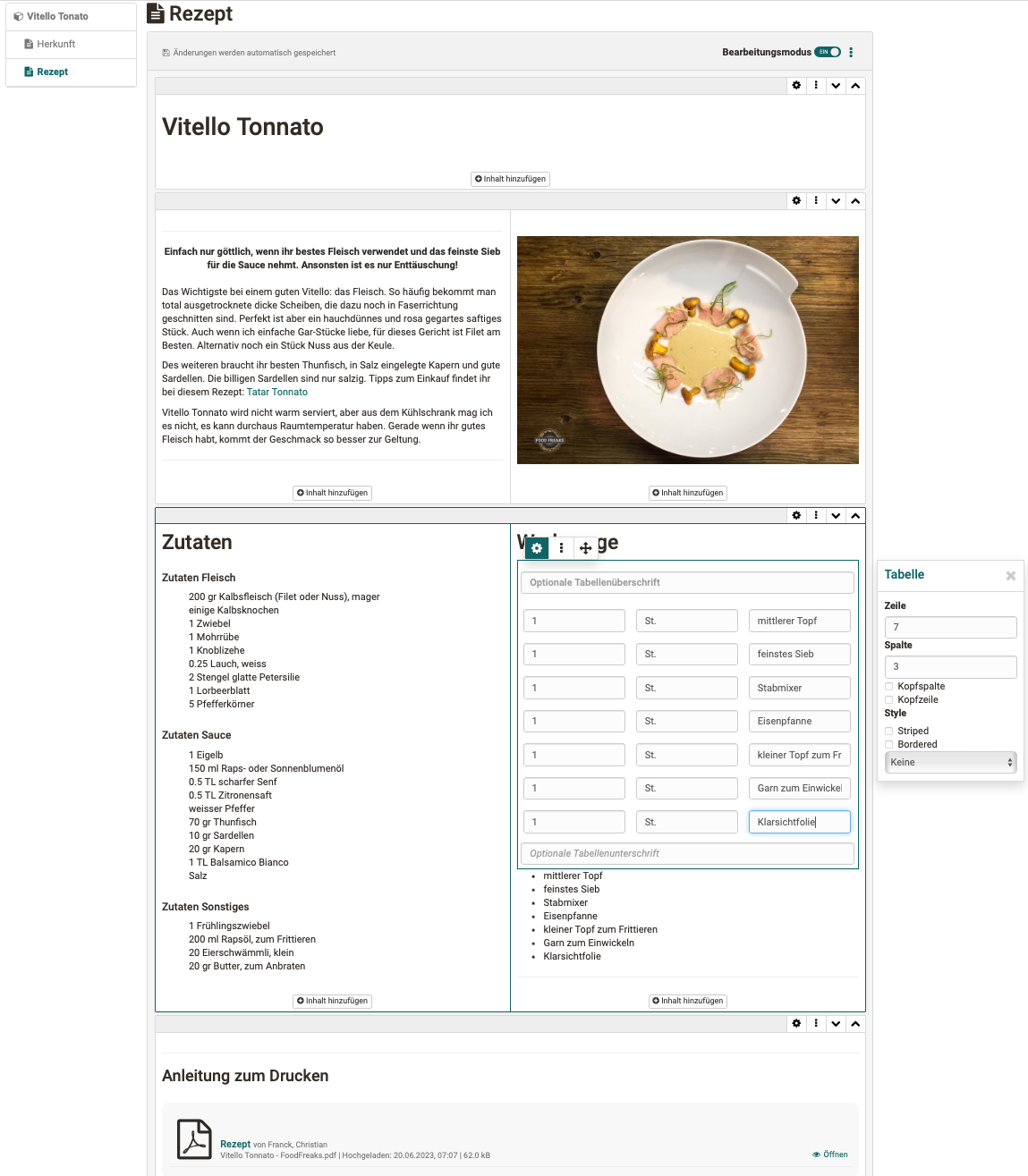
Create page content
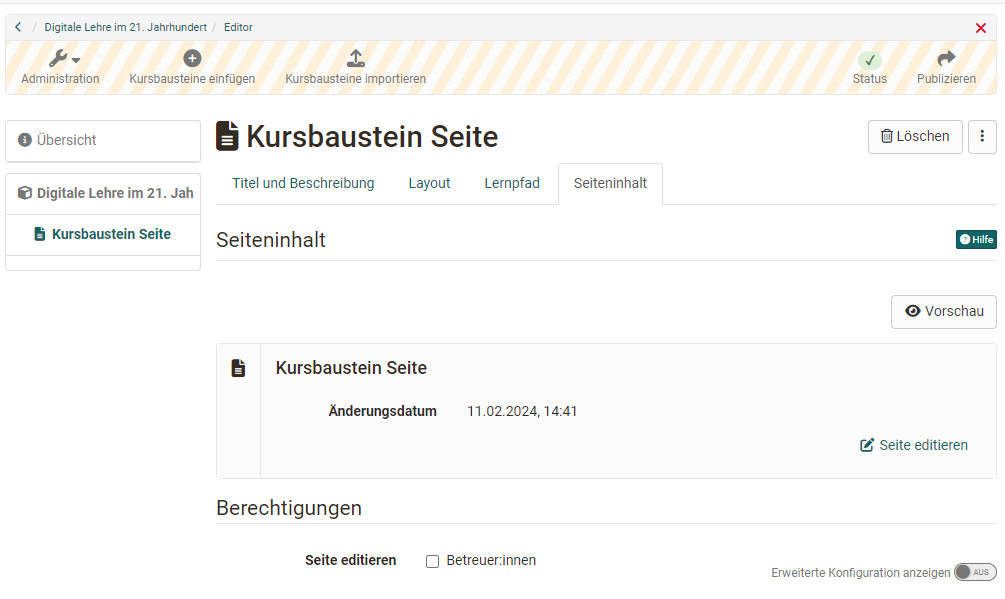
The course element page is added in the course editor and configured in the tabs. Open the editor in tab "Page content" .
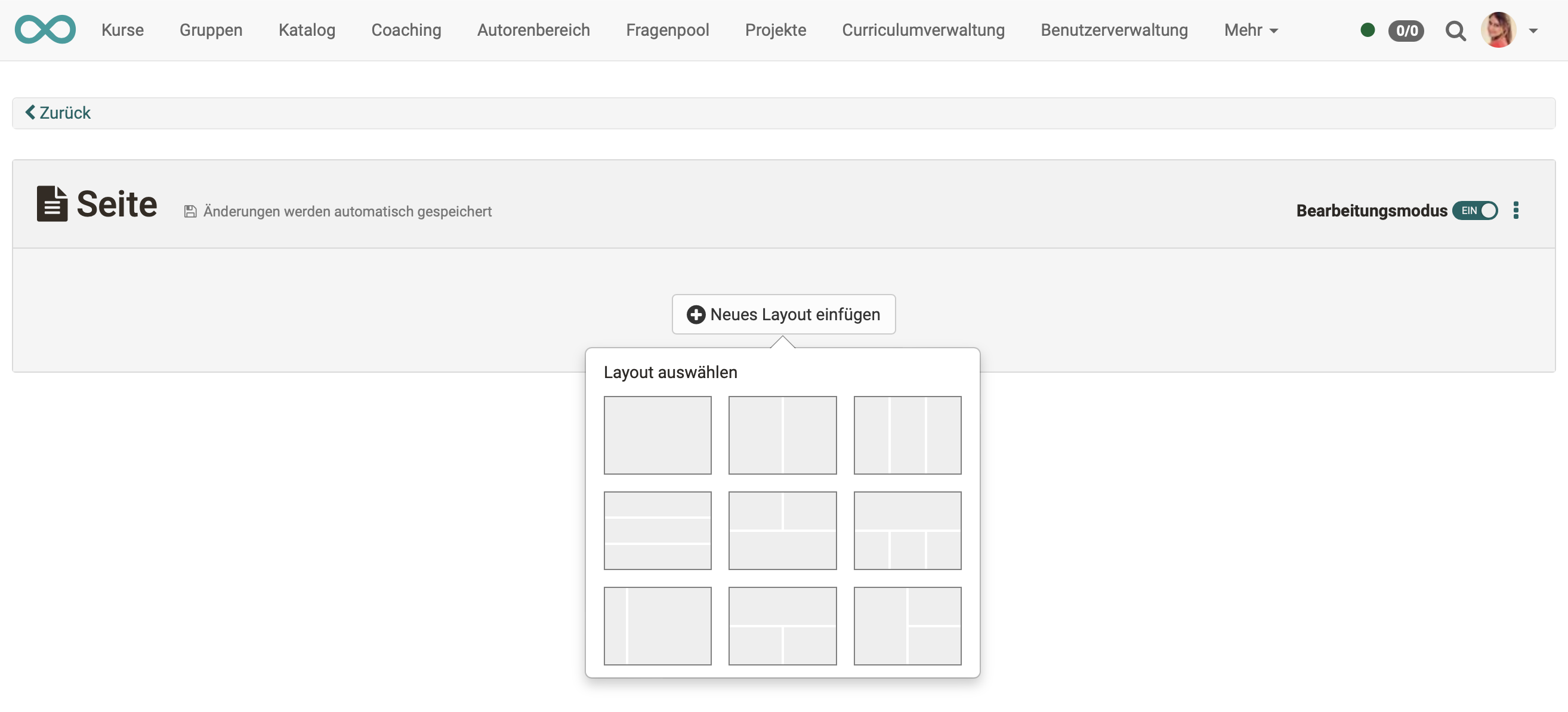
The Content Editor will open. First, add a new layout. (More of these layouts can be added).
There are two ways to fill the page: content elements are added individually, or existing content in markdown or Word format is imported in one step.
Adding content elements individually
One or more content elements can be added in each field of a layout.
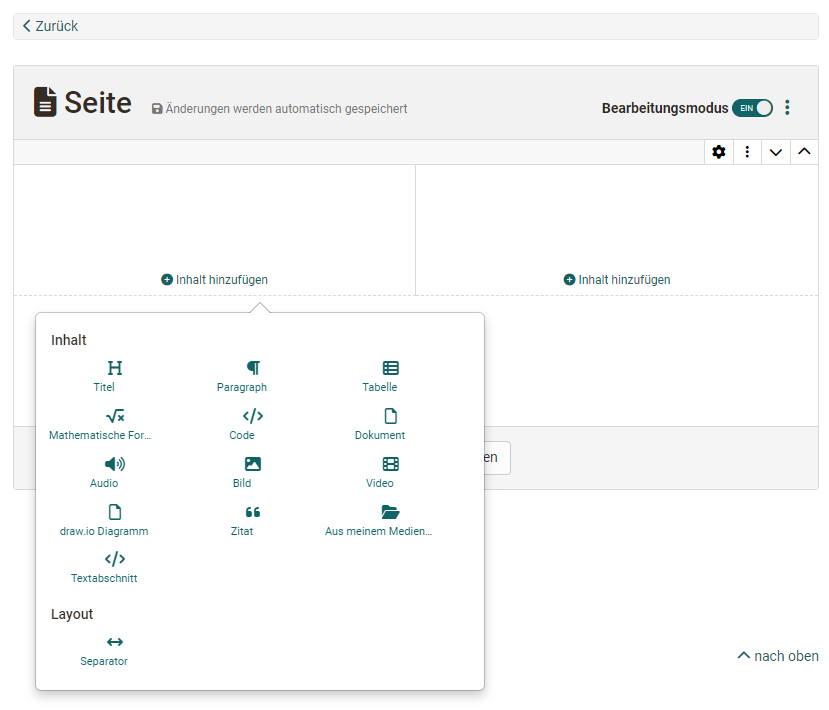
The following content elements are available:
- Titel: Titles use the predefined sizes and styles h1, h2, etc.
- Paragraph: A text that can be designed with a small HTML editor.
- Table: Table, which can be designed in an associated popup.
- Mathematical formula: Creating mathematical formulas with the MathJax formula editor.
- Code: Display of programming code without execution.
30 different programming languages

- Document: Word, PowerPoint or Excel documents can be uploaded as well as created directly. PDF and others can be uploaded or taken from the Media Center.
- Audio: Select audio, re-record or add as MP3 or m4a file
- Image: Inserting an image from the Media Center or uploading.
- Image gallery: Display of several images as a slideshow, in a grid or with small thumbnails
- Image comparison: Two superimposed images can be blended using a slider
- Video: Inserting a video file from the Media Center or uploading or new recording
- draw.io graph: Create new or select from the list
- Citations: Citations can be stored and reused as standalone content items in the Media Center.
- From my Media Center: Access to all elements of your own Media Center. New elements can also be created for the Media Center.
- Text segment: A text that can be designed with an HTML editor. (With slightly more options than in the Paragraph content element).
- Separator: A line used to visually separate two layouts.
- Table of contents: Lists the titles of the page as clickable jump marks
- Quiz: Embeds quiz questions into the page, newly created or imported from the question bank . For essay questions, learners receive AI feedback on their answer here
Importing existing content from markdown or Word
Instead of building the page element by element, existing content in markdown format or as a Word document (.docx) can be imported directly : as a file upload or as pasted text, e.g. from the clipboard. OpenOlat automatically converts the content into the matching blocks of the Content Editor (Title, Text, Table, Code example, Image, etc.); referenced images are stored in the Media Center.
This allows content from external tools, plain text files or AI applications to be adopted as a course page without manual reformatting.
Edit page (Edit mode)
Edit layout
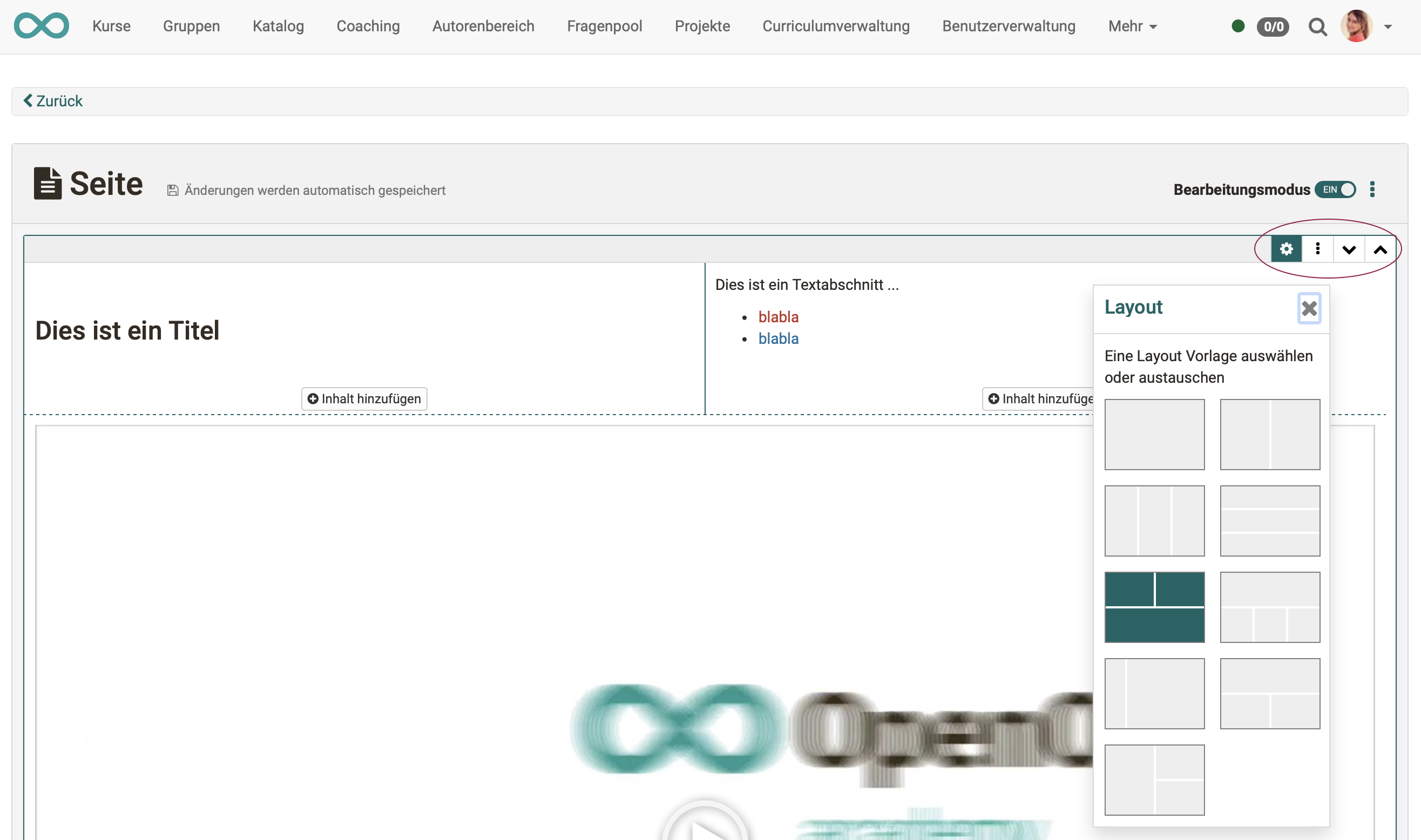
To edit a layout, select the layout. An associated frame is displayed. In the upper right corner you will see icons with editing options.
Once a layout is selected, the arrangement of the content elements can also be changed later by clicking the gear icon and selecting a different layout arrangement.
Existing content elements are preserved and can be moved to new layout fields.
Edit content elements
A content element can be changed by selecting it with a mouse click and using the buttons in the upper left corner.
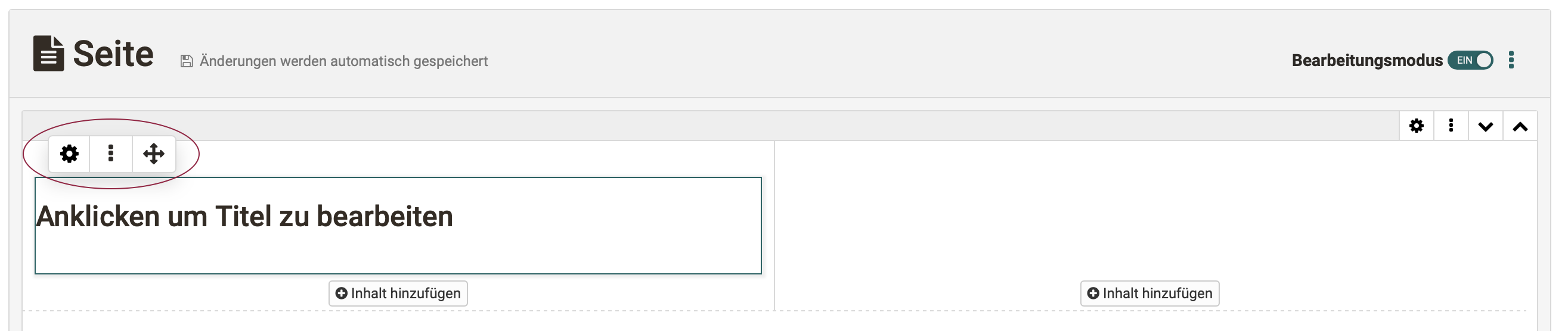
- Cogwheel-Icon: opens popup with editing options
- 3 Points: Deleting the current element, inserting additional content elements
- Arrow cross: Move within the layout (also to other fields)
Media storage
The inserted media is not stored as with the course element "HTML page" in the storage folder of the course but in the Media Center. Here you will find all installed media and can also regulate further management and release.
Uploading media to the Media Center is done in the personal menu or in the Content Editor when creating a new content item.
Differences: Page - HTML-Page
| Course Element Page | Course Element HTML Page | |
|---|---|---|
| Content creation | in Content Editor | in HTML Editor |
| Layout | block-based approach | HTML Page |
| Creation effort | lower, since pre-structured | possibly higher |
| Preview | directly in editor | separate tab "Display content" |
| Media | in Media Center | in storage folder |
| Editing can be allowed to coaches | ||
| Extended authorizations | ||
| Integration pdf | ||
| Integration Office-Documents | ||
| Integration draw.io Diagrams |
Hint
If only Office documents are to be included, the course elements "Document" or "Folder" can be used as an alternative.
Important
The page can be edited by course owners or optionally by coaches.
Further information
Mentioned on this page
Content Editor >
Course Element "HTML page" >
Storage folder >
Personal tools: Media Center >
Further reading
Types of Course Elements >
Course Element "Portfolio Task" >